📋 Navigation
White-Handed Gibbon Activity in Captivity
A Behavioral Study at Santa Ana Zoo
Om Gupta, Esther Li, Alfredo Magallon, Cindy Nguyen
Introduction
White-handed gibbons in captivity, such as in zoos, will not have the same experiences and freedoms as their wild counterparts. While well-intentioned zoos attempt to bridge this gap, it often leads to different, even detrimental, behaviors in captive animals compared to in the wild. This first-semester capstone project will focus on how the activity budget of white-handed gibbons in captivity (SA ZOO) compares to that of those in the wild.
Hypothesis: White-handed gibbons in captivity will show less activity and less varied behavior than their wild counterparts.
Methodology
Before collecting data, the team conducted online research to understand and compare the typical wild behaviors and typical zoo behaviors of white-handed gibbons. Then, going to the Santa Ana Zoo to observe their two white-handed gibbons, the team conducted two types of observation: scan sampling and focal sampling. Two members chose scan sampling over one-minute intervals and two members chose focal sampling for one of the two white-handed gibbons. One observation was conducted in the morning after 11 a.m., the second in the afternoon after 1 p.m.
Images from the SA Zoo - Gibbons & Enclosure
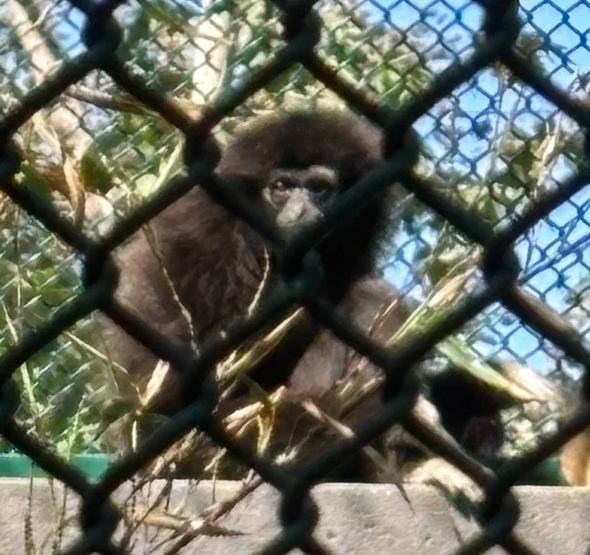
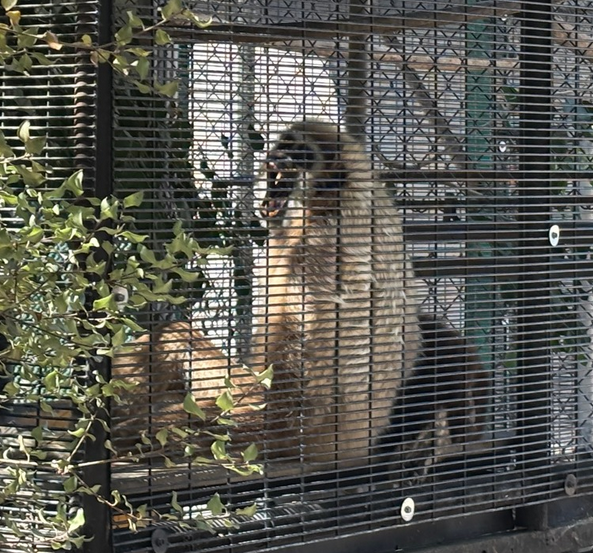
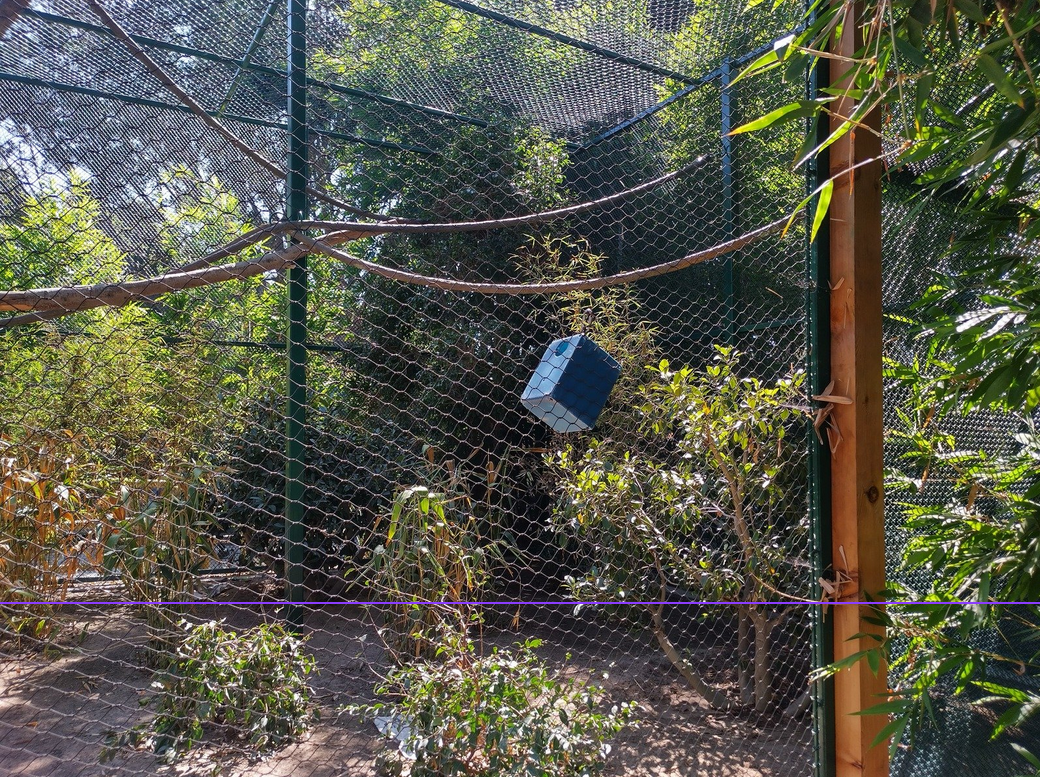
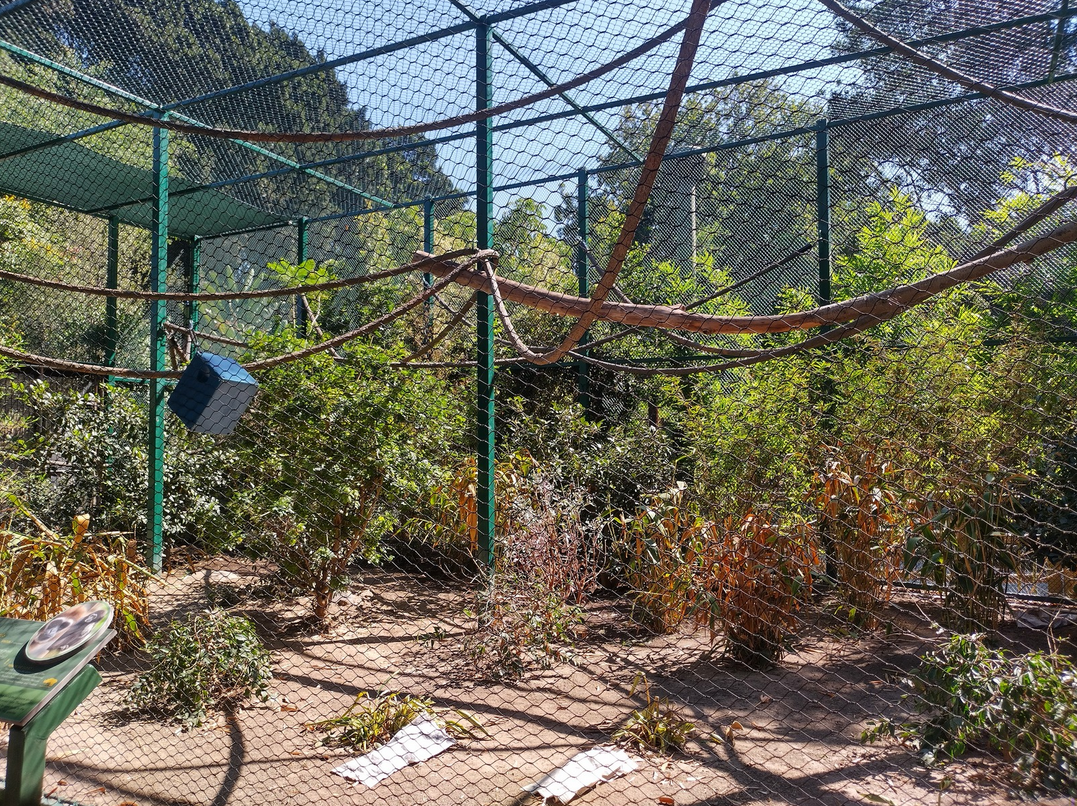
Data & Results
Pie Chart Analysis
Mean Percentage out of Total Daily Activity
Detailed Data Tables
Key Results
- Most time was allocated towards “resting” activities for monkeys in captivity (.509 + .041)
- The least amt. of time was allocated towards feeding (.217 + .033)
- CIs overlap for monkeys in captivity vs. wild for location/movement
- Statistical significance: Monkeys rest more in captivity, but feed less
Analysis & Discussion
There is overlap in the 95% confidence intervals for the locomotion/movement of the monkeys, indicating that there is no statistically significant difference between the physical activity of the lar gibbons in captivity vs. in the wild. However, there is a statistically significant difference in the amount of daily activity allocated towards feeding and resting for monekys in captivity vs. monkeys in the wild, with the former feeding less and resting more than the latter. In captivity, food is typically provided in a predictable way (e.g., delivered by keepers, stored in one part of the enclosure) which reduces the need for active foraging (less effort required to find food). Captive enclosures may restrict locomotion, reduce opportunities to move between widely spaced trees or search for food. As a result, rest replaces the time dedicated to foraging (White, 2019), as the environment removes the need for vigilance when diet is much more variable in the wild.
- More enrichment = more foraging behavior (Gronqvist et al., 2013).
Conclusion
Our hypothesis that gibbons in captivity show less active “activity” is supported by statistically significant difference in resting and feeding. Although there is similar time allocated for movement to monkeys in the wild, it’s important to note that much of the activity dedicated towards locomotion consisted of the stereotypic brachiation, in which monkeys swung repeatedly throughout the perimeter of the enclosure prior to noon. This repetitive behavior + the use of unnatural objects for enrichment (i.e. metal boxes, ropes) show how lack of complexity in environment + limited space can cause abnormal behavior. Stereotypies like these often indicate stress + frustration from the environ. constraints of poor welfare, CNS dysfunction. Although captive Lar gibbons still move in species-typical ways, the variety and purpose of these movements are reduced, emphasizing the need for more enriched habitats that promote natural foraging and movement to improve their well-being.
Key References
- White, K. 2019. Effects of captivity on the activity budgets of lar gibbons (Hylobates lar). Canopy 20(1), 43-45. (n.d.). Animal Welfare Institute. https://awionline.org/lab-animal-search/white-k-2019-effects-captivity-activity-budgets-lar-gibbons-hylobates-lar-canopy
- Gronqvist, G., Kingston-Jones, M., May, A., & Lehmann, J. (2013). The effects of three types of environmental enrichment on the behaviour of captive Javan gibbons (Hylobates moloch). Applied Animal Behaviour Science, 147(1-2), 214–223. https://doi.org/10.1016/j.applanim.2013.04.021